SignLang AI Launches the first ever Sign Language Infrastructure in Nigeria
The Day Nigeria Learned to Listen With Its Eyes
How a skeletal wireframe, a stubborn founder, and 40 million data points became the first sign language AI infrastructure built in Nigeria
There is a particular kind of silence that fills a room right before something works for the first time. Not the silence of absence, but the silence of everyone holding their breath.
That was the silence in a small server room in Abuja on the morning the first translation came through clean.
“Good morning,” signed the volunteer on camera.
“Good morning,” printed the screen, 42 milliseconds later.
No one clapped right away. They just looked at each other. Then someone laughed, and then everyone was talking at once, and that’s how SignLang AI’s Nigerian infrastructure was born — not with a launch event, but with a room full of engineers who couldn’t quite believe their own pipeline.
The Problem Nobody Was Pricing In
For years, the story of AI in West Africa has been a story of importing solutions built somewhere else and hoping they fit. Voice assistants that mishear half the accents in Lagos. Translation tools with no idea what to do with Hausa, Yoruba, or Igbo, let alone Nigerian Sign Language.
And for the country’s Deaf community — several million people, by most estimates — the digital world had quietly built itself around a assumption that everyone could hear the internet, or at least read it in a hurry, in a language the interface expected.
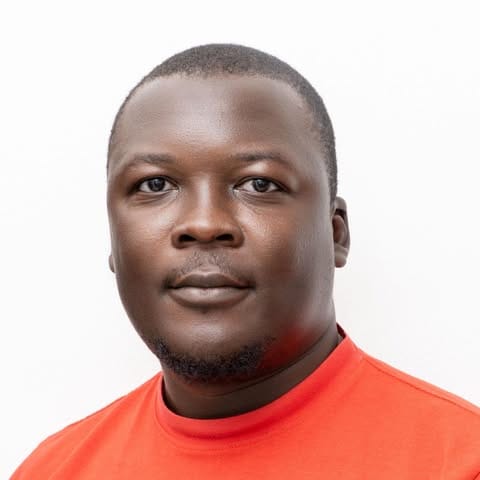
“We kept getting told the market was too small to build for,” says Yohanna Ayuba Musa, Founder and AI Lead of SignLang AI’s Nigerian operations. “But ‘small’ was just a word for ‘nobody has counted them properly.’ The moment you actually go and sit with Deaf communities, you realize the market isn’t small. The attention was.”
Yohanna had spent years watching the gap up close — interpreters stretched thin across hospitals, classrooms, and government offices, video call software with no accommodation for signed language at all, an entire category of communication that most infrastructure treated as an edge case instead of a first-class citizen.
So the team did the unglamorous thing. Instead of chasing a headline feature, they went after the boring, foundational layer nobody wants to fund: the infrastructure. The skeletal tracking. The low-bandwidth compression. The plumbing that would let anything else get built on top of it.
Built for the Network You Actually Have
The technical challenge was blunt: most sign language AI research assumes a world of fibre connections and idle GPU clusters. Nigeria’s mobile networks — the real ones, the ones people actually use in Kano and Enugu and Port Harcourt, not the ones in a pitch deck — needed something else entirely.
The team’s answer was to stop sending video altogether. Instead of transmitting frames, the system transmits vectors — skeletal coordinates of hands and motion, compressed down to a fraction of the payload of raw footage. It’s the difference between mailing someone a photograph of a dance and mailing them the choreography.
“Eighty-five percent less data, and it still holds up on 3G,” Yohanna says. “That number wasn’t a nice-to-have. It was the whole point. If it doesn’t work on the network people actually have in their pocket, it doesn’t work.”
The First Real Conversation
The Abuja pilot ran for six weeks before that morning in the server room. Six weeks of failed handshakes, dropped frames, a camera angle that kept confusing a wave for a “yes,” and one memorable afternoon where the whole system decided every gesture meant “the,” for reasons nobody has fully explained to this day.
Then, on a Tuesday, a Deaf receptionist at a partner clinic in Abuja used the system to check in a patient without an interpreter present for the first time in the clinic’s history.
“She didn’t say anything about the technology,” Yohanna recalls. “She just went back to her desk and kept working. That was the best review we ever got — that it was boring. That it just worked, and she didn’t have to think about it.”
What Comes Next
The Nigerian deployment is now the anchor node for what the team hopes becomes a wider West African network — one built with, not just for, the communities it serves. Every dataset that trains the models is reviewed by Deaf linguists first. Every product decision runs past an accessibility board with actual signing Deaf members on it, not just consultants brought in at the end to sign off on a decision already made.
“‘Nothing for us, without us’ isn’t a slogan we put on a slide,” Yohanna says. “It’s the only way this was ever going to work. You can’t build translation infrastructure for a language you’re not willing to actually learn from the people who speak it.”
There’s still a long road ahead — more dialects to support, more low-bandwidth environments to test in, more clinics and classrooms and call centers waiting for a system that finally meets them where they are. But for one morning in Abuja, in a small room that smelled like solder and instant coffee, a room full of engineers watched two words cross a 42-millisecond gap and land exactly where they were supposed to.
SignLang AI’s Nigerian infrastructure is currently in expanding pilot deployment across partner clinics and institutions. Interested in bringing it to your organization? Request API access or reach out to the team directly.
Leave a Reply
You must be logged in to post a comment.